
 JA
JA  EN
EN  FR
FR  DE
DE  ES
ES  PT
PT  NL
NL  SV
SV  KO
KO Training an Irish Wolfhound is not about turning the breed into a high-drive obedience machine. It is about building safe, reliable manners in a dog that can be calm, affectionate, sensitive, and absolutely enormous. PetMD says Irish Wolfhounds are gentle, calm dogs that generally respond well to early socialization and obedience training, while the Irish Wolfhound Club of America says they are fast learners who respond best to positive training methods.
That combination is important. A Wolfhound may be soft-natured, but a soft giant can still pull hard on leash, crowd people, ignore recall when something exciting moves, or become difficult to manage if training is delayed. Owner discussions often reflect the same reality in everyday terms: start leash work early, teach basic obedience before the dog is huge, and keep sessions short enough that the dog stays engaged rather than mentally checking out.
Quick Answer: What Kind of Training Does an Irish Wolfhound Need Most?
Most Irish Wolfhounds need early socialization, positive reinforcement, reliable leash manners, calm household behaviour, and a strong foundation in everyday obedience such as recall, sit, stay, waiting at doors, and polite greetings. The Irish Wolfhound Club of America says basic obedience and socialization are very important for a growing puppy, and PetMD notes that many size-related challenges in the breed can be improved through early training.
Irish Wolfhound Training at a Glance
| Training Area | What Most Irish Wolfhounds Need | Why It Matters |
|---|---|---|
| 社会化 | Early, calm exposure to people, places, sounds, and handling | Helps giant puppies grow into stable adults |
| Leash manners | Start young and practice consistently | A pulling Wolfhound quickly becomes hard to manage |
| Basic obedience | Sit, stay, come, wait, leave it, polite greetings | Real-life skills matter more than flashy routines |
| Recall | Strong practice, but never blind trust around prey drive | They are still sighthounds and may chase |
| Session length | Short, clear, positive sessions | Many owners say they tire mentally before they shut down physically |
| House manners | No jumping, calm doorways, settling, respectful space use | Giant size raises the stakes on normal bad habits |
This overall picture lines up with IWCA guidance, AKC puppy resources, PetMD breed guidance, and owner reports from Irish Wolfhound communities.
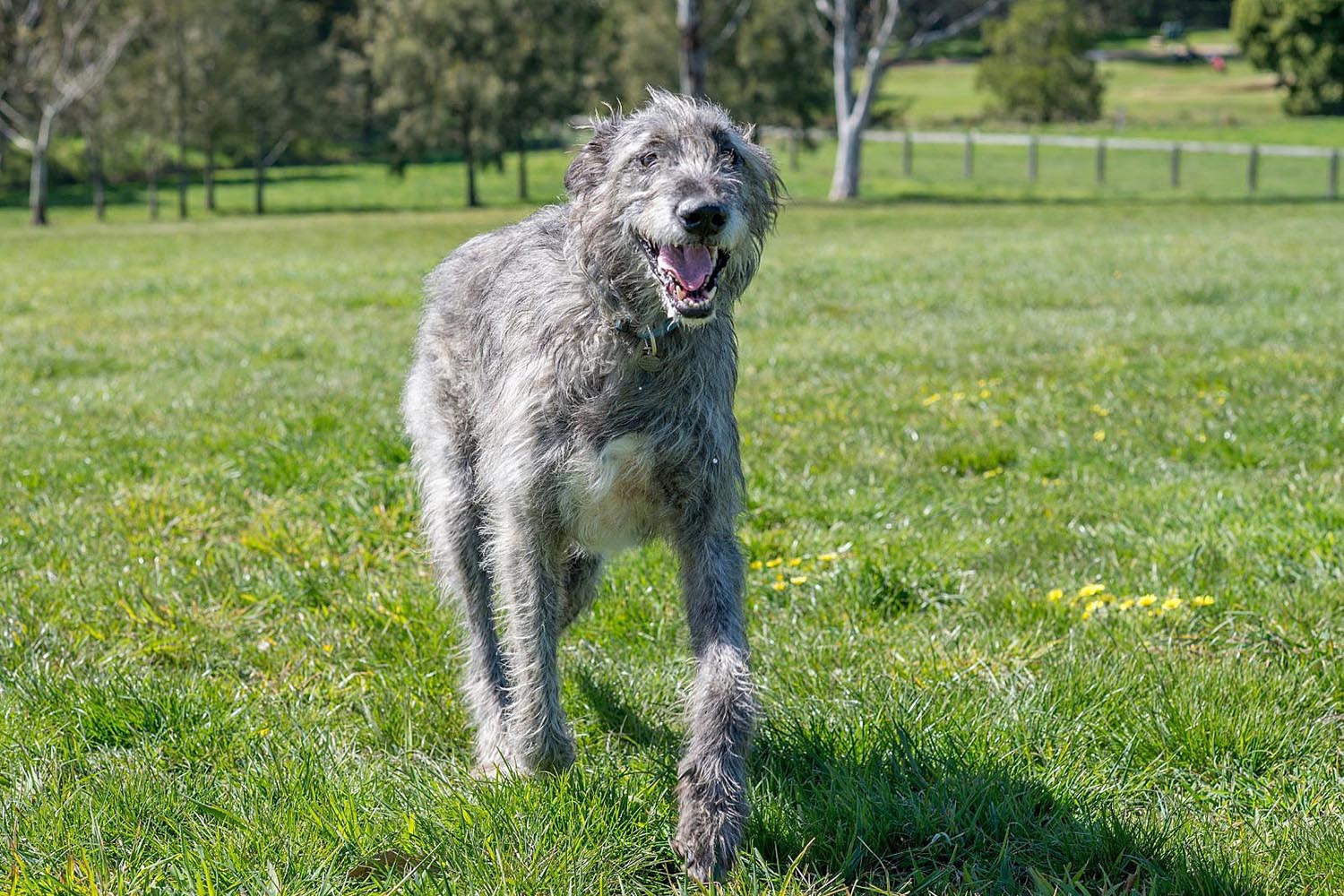
How Irish Wolfhounds Tend to Learn
Irish Wolfhounds are often described as fast learners, but not in the same style as an intense working breed that wants constant repetition. The Irish Wolfhound Club of America says they are fast learners and respond best to positive methods. The club’s obedience page also notes that the breed’s temperament can affect how well it fits traditional obedience expectations, which is a useful reminder that training should match the dog in front of you.
In practical terms, many Wolfhounds seem to learn quickly when the request makes sense, the tone stays fair, and the session does not drag on too long. Owner discussions often describe them as intelligent but not endlessly repetitive dogs. Several owners specifically mention that training tends to go best when sessions stay brief and clear, rather than treating the breed like a robotic performer.
Why positive training matters
Wolfhounds are frequently described as sensitive dogs. PetMD calls them gentle and calm, and owner experience often suggests that yelling or rough handling is more likely to reduce engagement than improve it. Positive reinforcement, consistency, and clear expectations usually produce better results than pressure-heavy methods.
Start Training Early Because Size Changes Everything
Almost every piece of good Irish Wolfhound training advice comes back to the same point: start early. AKC’s article on raising an Irish Wolfhound puppy emphasizes that giant-breed puppyhood comes with special challenges, and PetMD says early socialization and obedience help address many issues linked to the breed’s size. A puppy who drags on leash, jumps on people, or ignores recall may still seem manageable at first, but the same habits look very different in a giant adolescent.
Owners say the same thing in a more blunt way. One recurring theme in Wolfhound discussions is that when they pull, they really pull, so leash training should begin before strength outpaces handling.
Socialization: Calm Confidence Matters More Than Constant Excitement
Good socialization for an Irish Wolfhound is less about making the puppy greet everything and more about helping the dog stay composed in normal life. The IWCA says basic socialization is very important for a growing puppy, and AKC’s Wolfhound puppy article frames early exposure as part of raising a stable giant dog.
Because Wolfhounds attract attention in public, this matters more than people think. A well-socialized Wolfhound should be able to handle curious strangers, different surfaces, grooming, car rides, veterinary handling, and everyday noise without becoming overwhelmed. That kind of composure is usually more useful than trying to create a dog that wants to interact with everyone.
What to prioritize early
For most puppies, the most useful early exposures include leash walks in quiet new places, calm greetings, handling of ears, feet, and mouth, short car trips, gentle household noise, and learning how to settle. Those basics build a more usable adult dog than novelty for novelty’s sake. This is an inference based on breed guidance emphasizing early socialization and giant-dog manners.
Leash Training Should Start Before the Dog Is Strong
Leash training is one of the most important practical skills in this breed. Irish Wolfhounds are large enough that poor leash manners can quickly turn walks into a safety problem. Owner discussions repeatedly warn new people to start leash work early because once a Wolfhound decides to pull, the handler may not have much leverage left.
That does not mean the answer is force. It means being proactive. Loose-leash walking, attention to the handler, stopping before pulling becomes self-rewarding, and rewarding calm position early all matter. Some owners use tools such as head halters or front-attachment setups, but the bigger point is that the dog needs to learn how to move with you politely before sheer size becomes the whole story.
Leash skills worth teaching early
For most Wolfhounds, the most useful early leash skills are walking without forging ahead, checking in with the handler, stopping at curbs or doors, and recovering calmly after distractions. Those skills create a safer giant dog than simply trying to “wear the dog out” on walks. This is an inference supported by owner leash-training advice and the breed’s size-related training needs.
Recall Matters, but So Does Respecting Sighthound Instinct
Recall is one of the most valuable things you can teach any dog, and it is especially important in a giant sighthound. In a dog-training discussion about Irish Wolfhounds, an owner specifically highlighted recall as lifesaving and grouped it with other core skills like leave it, watch me, and waiting at doors.
At the same time, recall training should be built with honesty. Irish Wolfhounds are sighthounds, and movement can override good intentions. That means recall should be practiced seriously and rewarded well, but owners should still be careful about off-leash assumptions in unsafe environments. That caution is a reasoned inference from the breed’s sighthound nature and owner discussions about real-life training.
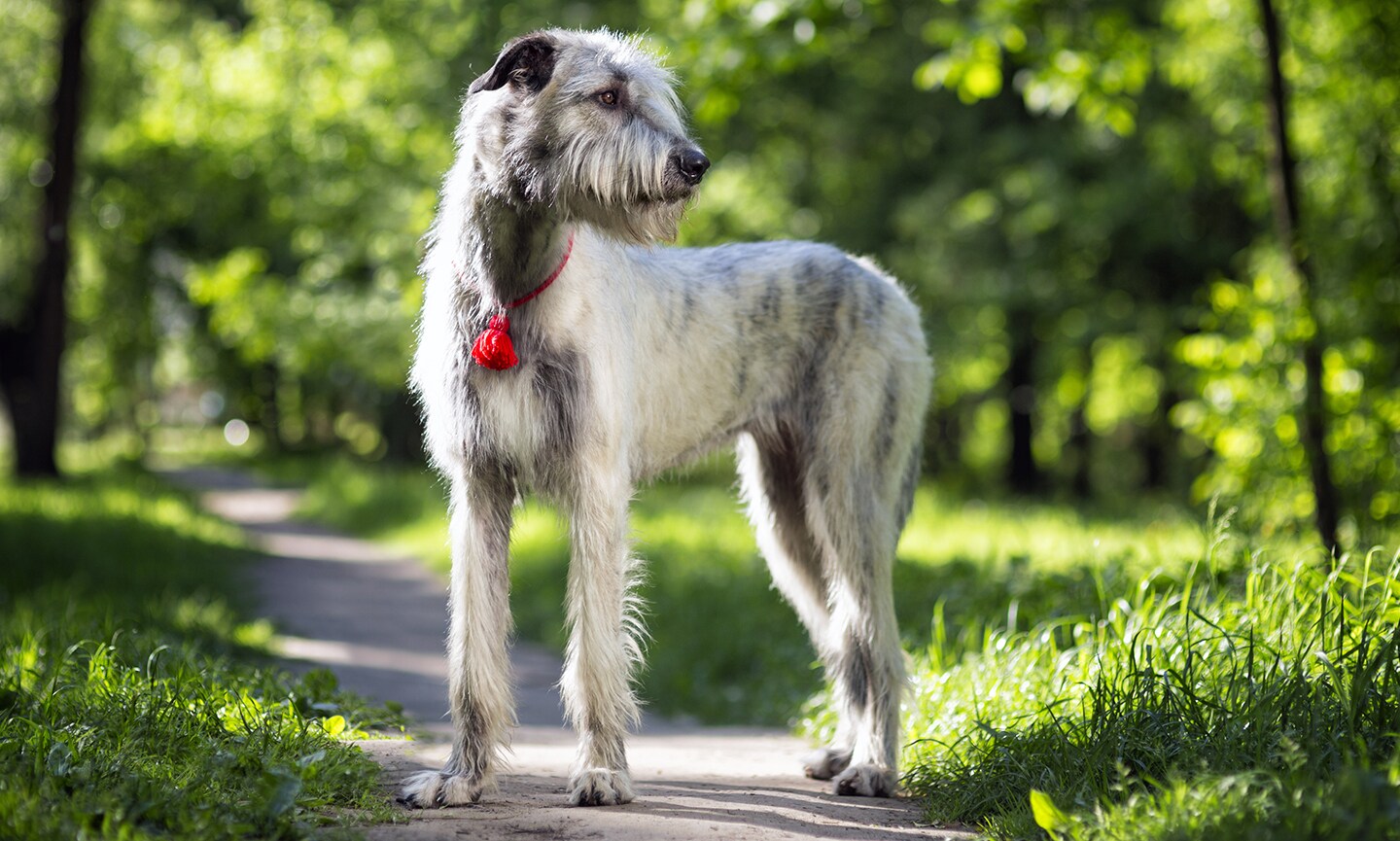
House Manners Matter More Than Fancy Commands
Because Irish Wolfhounds are so large, everyday manners often matter more than advanced tricks. A dog that can wait at doorways, settle on cue, walk politely through the house, greet people without jumping, and move off furniture or out of pathways when asked is usually easier to live with than a dog that knows impressive commands but lacks daily self-control. Owners in Wolfhound discussions repeatedly stress not tolerating jumping and making sure core manners are in place early.
This is one of the places where giant-dog training differs from ordinary dog training. Small bad habits scale up fast. A Wolfhound that leans, barges, sprawls across doorways, or launches into greetings may be affectionate, but affection does not cancel out size.
Core manners worth prioritizing
For most homes, the most useful “advanced” training foundation is actually basic life skills done well: wait, come, leave it, place or settle, stand for handling, no jumping, polite leash walking, and calm greetings. These are the behaviours that make a giant dog manageable in ordinary life.
Keep Training Sessions Short Enough to Work
One of the more specific owner insights about Irish Wolfhound training is that the breed often tires out mentally before people expect. In one owner discussion, a Wolfhound owner said these dogs typically do best with training sessions lasting no more than about 20 minutes at a stretch, though of course individuals vary.
That fits the broader picture from breed-club obedience guidance: this is not usually a breed that thrives on endless repetition. For many Wolfhounds, shorter sessions with clear goals, rewards, and breaks will accomplish more than long, grinding practice.
Exercise, Enrichment, and Training Work Better Together
Training tends to go best when it is part of a larger routine rather than a separate event. PetMD describes Irish Wolfhounds as gentle giants that still need regular exercise, and broader PetMD hound guidance emphasizes physical and mental wellbeing together. The IWCA also notes that Wolfhounds can participate in obedience, rally, lure coursing, tracking, therapy work, and other activities.
That matters because many training problems in giant dogs are not pure obedience problems. They are often lifestyle problems: too little structure, too little practice with self-control, too little mental engagement, or too much unmanaged freedom before the dog understands the rules. For many Wolfhounds, training improves when daily life has enough walking, enough rest, enough consistency, and enough purpose. This is an inference supported by the breed’s exercise and activity guidance.
Training Priorities by Life Stage
| Life Stage | Training Focus | Why It Matters |
|---|---|---|
| Puppy | Socialization, handling, leash basics, recall games, settling | Builds confidence before size becomes difficult to manage |
| Adolescent | Impulse control, polite greetings, loose-leash walking, stronger recall | This is often when strength starts outrunning manners |
| Adult | Consistency, advanced everyday manners, continued enrichment | Keeps the dog reliable and easier to live with long term |
This life-stage approach fits AKC puppy guidance, IWCA training guidance, and owner reports that emphasize early basics first and real-world reliability over showy training goals.
Can Irish Wolfhounds Do More Than Basic Obedience?
Yes. The IWCA’s activities page notes that Irish Wolfhounds are capable of obedience, agility, rally, lure coursing, racing, tracking, and therapy dog work. That is a useful reminder that the breed is not untrainable or dull. It is simply a breed whose size, temperament, and traditional style make thoughtful handling more important than intensity for intensity’s sake.
What tends to work best is choosing goals that suit the individual dog. Some Wolfhounds enjoy structured sport and advanced cues. Others shine more in calm public manners, therapy-style steadiness, and reliable companionship. Both outcomes count as excellent training if the dog is safe, stable, and cooperative. This is an inference supported by the range of activities the breed club lists.
Common Training Mistakes With Irish Wolfhounds
Waiting too long to start
Delaying leash work, greetings, recall, or handling often creates much bigger problems later because the dog grows so quickly. Owner advice repeatedly warns against putting off basics in a breed this large.
Training too long
Long sessions can make some Wolfhounds fade mentally. Several owners suggest short sessions work better than pushing until the dog is clearly over it.
Focusing on impressive tricks instead of daily manners
For most homes, reliable everyday life skills matter more than showy obedience. This is strongly supported by owner emphasis on recall, leash manners, jumping, doors, and settling.
Ignoring prey drive when thinking about off-leash freedom
Even a well-trained Wolfhound is still a sighthound. Owners who respect that usually make safer decisions. This is an inference based on breed type and recall discussions.
よくある質問
アイリッシュ・ウルフハウンドは訓練しやすいですか?
They are often fast learners, but they usually do best with positive methods, patience, and clear expectations rather than harsh or highly repetitive handling. The Irish Wolfhound Club of America says they are fast learners who respond best to positive training methods.
What should I train first with an Irish Wolfhound puppy?
Start with socialization, leash basics, handling, recall games, calm greetings, and simple obedience such as sit, wait, and come. Breed guidance repeatedly emphasizes socialization and basic obedience early.
Do Irish Wolfhounds pull on leash?
They can, and because of their size it matters a lot. Owners commonly recommend starting leash training early before the dog becomes too strong to manage easily.
How long should training sessions be?
Many owners find that shorter sessions work best. In one owner discussion, a Wolfhound owner said many do best with training lasting no more than about 20 minutes at a stretch.
Can Irish Wolfhounds be trusted off leash?
Training recall is important, but owners should still be cautious because Irish Wolfhounds are sighthounds and may chase moving animals.
Do Irish Wolfhounds need advanced training or just basic obedience?
Most need strong everyday manners first, but the breed can also participate in activities such as obedience, rally, tracking, lure coursing, and therapy work.
最終的な考え
Training an Irish Wolfhound is usually less about domination or dazzling performance and more about thoughtful, early, everyday guidance. The breed tends to respond best to positive training, sensible structure, and a focus on real-life manners that make a giant dog safe and easy to live with.
For most owners, the best results come from starting early, keeping sessions short, building leash and house manners before size becomes a problem, and remembering that calm giant dogs still need training just as much as busy little ones do.