
 JA
JA  EN
EN  FR
FR  DE
DE  ES
ES  PT
PT  NL
NL  SV
SV  KO
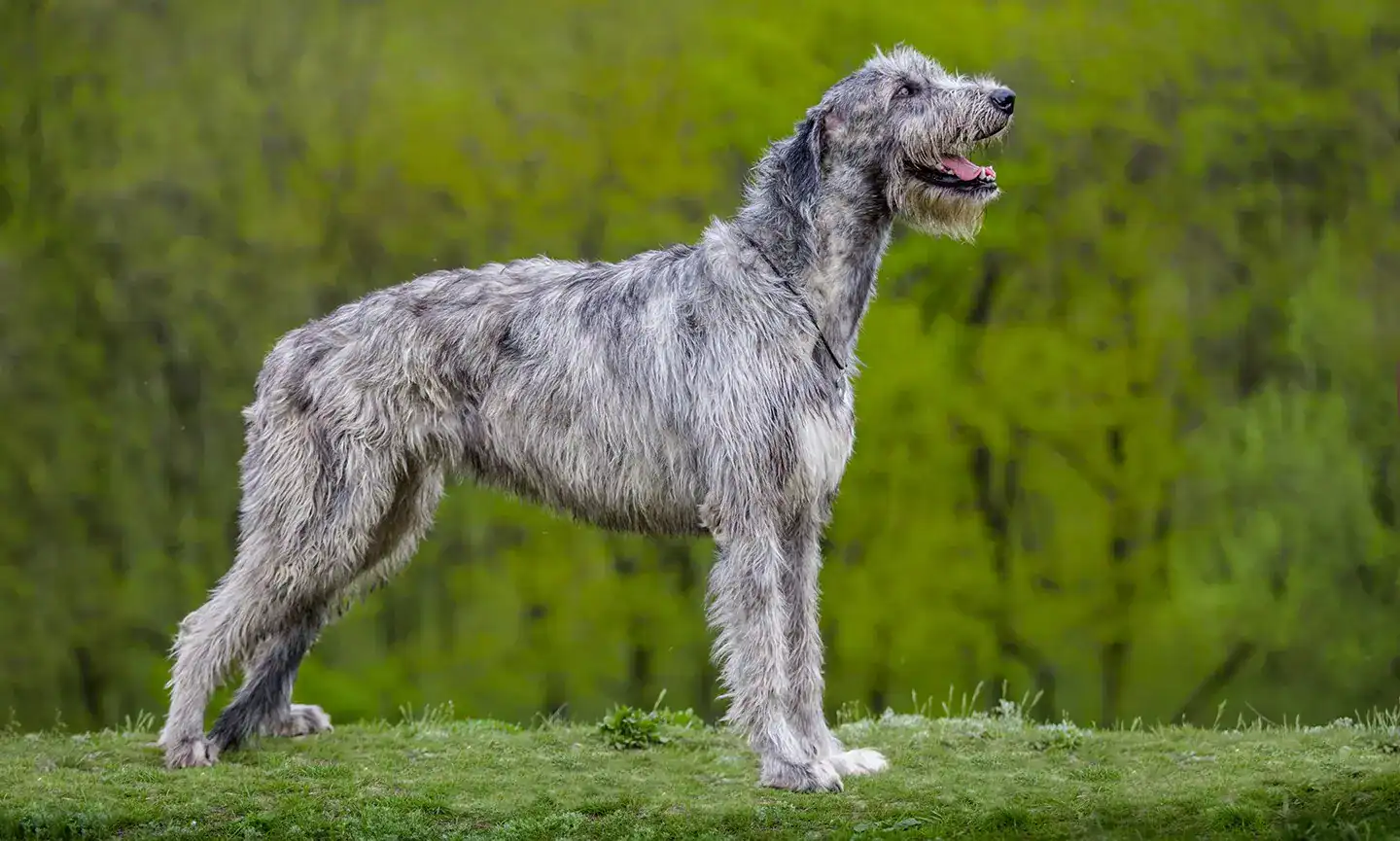
KO The Irish Wolfhound has an almost mythic reputation. They are one of the tallest dog breeds in the world, they look strikingly noble, and they often get described in glowing terms like gentle, dignified, and calm. Those descriptions are not wrong, but they can be incomplete. Our goal is to help readers understand what day-to-day life with this breed actually feels like, including the sweet parts, the awkward parts, and the realities that come with living with a giant sighthound. AKC describes the breed as courageous, dignified, and calm, while PetMD says Irish Wolfhounds are gentle, affectionate, and generally patient with children.
That polished summary matches a lot of owner experience, but owner discussions add useful nuance. In breed-specific Reddit threads, people repeatedly describe Irish Wolfhounds as soft-natured, friendly, emotionally sensitive, and surprisingly clumsy for such an elegant-looking breed. They are often calm, but not always effortless. They can be physically overwhelming simply because of their size, and many owners stress that early socialization and training matter more than people assume.
Quick Answer: What Is the Typical Irish Wolfhound Temperament?
The typical Irish Wolfhound is calm, affectionate, dignified, and people-oriented. Most are not sharp, suspicious, or naturally aggressive dogs. They are usually friendly or neutral with people, often patient in the home, and known for having a gentle presence despite their size. At the same time, they are giant sighthounds, so they may chase moving animals, mature slowly, and need thoughtful training simply because a dog that large can become difficult fast if manners are ignored.
Irish Wolfhound Behaviour at a Glance
| Trait | What It Often Looks Like | Why It Matters |
|---|---|---|
| Family attachment | Affectionate, close to people, often sensitive | Usually does best as a true companion, not a detached outdoor dog |
| Energy level | Calm overall, with short bursts of energy | They are not hyper, but they still need regular activity and space |
| Trainability | Capable, but often laid-back and not especially driven | Training works best with patience and consistency |
| 気質 | Gentle, soft, dignified | Harsh handling often works poorly with this breed |
| Prey drive | May chase things that move away | Secure fencing and leash awareness matter |
| Maturity | Slow to mature mentally and physically | A giant adolescent can be awkward and hard to manage |
| Social behaviour | Often friendly with people and other dogs | Good early experiences still matter |
| Guarding instinct | Usually low compared with true guardian breeds | They look imposing, but are often too friendly for protection work |
This overall picture is consistent across AKC, PetMD, the Irish Wolfhound Club of America, and owner discussions. The common thread is that Wolfhounds are usually sweet and steady, but they are also giant, sensitive, and not the kind of breed that becomes easy through size alone.
What Irish Wolfhounds Are Like at Home
At home, Irish Wolfhounds are often described as calm companions who like being close to their people. PetMD says they crave affection, and AKC materials repeatedly frame them as amiable, serene, and dignified. For many owners, that translates to a dog that is content to lounge nearby, watch the household, and be part of family life without always demanding constant action.
But the home experience is not just “big lazy dog.” Owner posts add more texture. People talk about puppies trying to drape themselves across furniture and people, adults who want to be close without realizing how much space they take up, and adolescents who can be awkward, clumsy, and slightly chaotic before they settle. That kind of insight matters because it helps readers picture the breed as it really is, not just as a polished breed-standard summary.
Are Irish Wolfhounds Good Family Dogs?
In many homes, yes. Irish Wolfhounds are widely described as patient, gentle, and affectionate, and PetMD says they are generally patient with children. The breed’s soft temperament is one reason people fall in love with them. Many owners also report that their Wolfhounds are kind and tolerant with people in everyday life.
Still, the real issue is not whether they are “nice.” It is whether a family is ready for a very large, slow-maturing dog. Even a sweet Wolfhound can accidentally knock over a child, crowd a nervous guest, or create chaos simply by moving through a tight space at the wrong moment. Families who do well with the breed usually understand that giant-breed management still matters, even when the dog has a lovely temperament.
What tends to help in family homes
Irish Wolfhounds usually do best in families that teach calm greetings early, supervise interactions with small children, and accept that giant breeds need structure. Size is a practical issue even when temperament is excellent. Owners often say the breed is wonderful with children, but also note that their sheer size can make them unintentionally rough.
Are Irish Wolfhounds Aggressive or Protective?
Generally, Irish Wolfhounds are not known for being aggressive. AKC and PetMD both describe them in calm, gentle terms, and owner discussions often go even further, saying Wolfhounds are almost too friendly if someone is hoping for a watchdog or guard dog. Their size may deter strangers, but their natural temperament is usually much softer than their appearance suggests.
That does not mean they are timid. The breed has a long history as a courageous hunting dog, and AKC specifically describes the Irish Wolfhound as fearless when needed. The modern reality is that most pet Wolfhounds are better understood as calm giant companions with an imposing look, not as hard protection dogs.
Training: Gentle Does Not Mean Self-Training
Irish Wolfhounds are often quite trainable, but they are not usually intense, eager-to-please working dogs in the style of a high-drive obedience breed. The Irish Wolfhound Club of America notes that they tend to be laid-back and casual rather than highly work-focused. That lines up closely with owner accounts describing them as sensitive, cooperative, but not especially sharp or mechanical in how they respond to training.
That matters because it changes what good training looks like. With a Wolfhound, the goal is usually not flashy precision. It is reliable manners, safe leash behaviour, calm greetings, handling tolerance, and a dog that can move through life politely despite being enormous. PetMD also notes that many challenges associated with the breed’s size can be improved through early socialization and obedience training.
Why positive handling matters
PetMD notes that Irish Wolfhounds are sensitive and respond best to positive reinforcement. Owners often describe them as soft dogs who do not do especially well with heavy-handed correction. That does not mean they should be allowed to do whatever they want. It means consistency and patience usually outperform force.
Socialization and Public Behaviour
A well-bred Irish Wolfhound should usually come across as composed rather than suspicious. PetMD says they are affectionate with most people, and owner experiences tend to support that. In public, many come off as calm and friendly, though their size attracts a lot of attention.
That attention is one reason socialization matters so much. AKC’s article on raising an Irish Wolfhound puppy points out that a well-bred Wolfhound can train nicely and often ends up meeting plenty of curious strangers in public. Early socialization helps the dog handle that attention with confidence rather than confusion.
Prey Drive and Chase Behaviour
This is one of the most important real-world parts of the breed. Irish Wolfhounds are sighthounds, and sighthounds can be strongly triggered by movement. CKCUSA’s breed information notes that Irish Wolfhounds may still chase things that move away from them and recommends secure fencing because they can easily outrun a person. Even when a Wolfhound is sweet and gentle at home, chase instinct can still matter outside.
That helps explain why many experienced owners are careful about off-leash freedom unless the environment is very controlled. A dog can be lovely with people and still be unreliable around fast-moving animals. For readers trying to decide whether the breed fits their life, this matters more than broad words like “noble” or “gentle.”
Exercise Needs: Calm Does Not Mean No Exercise
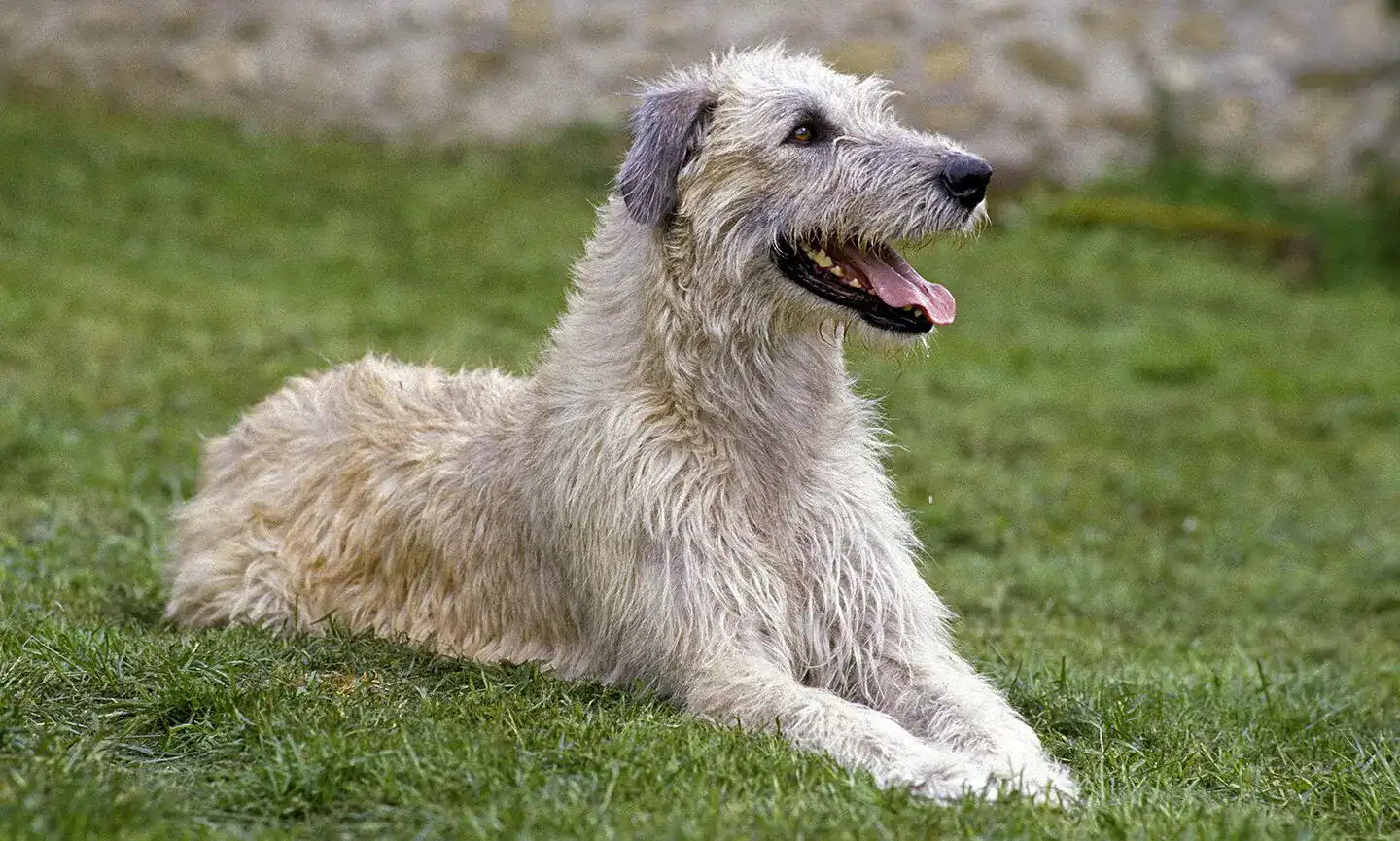
Irish Wolfhounds are often described as calm or low-energy, but that should not be misunderstood as inactive. PetMD describes them as gentle and calm, while owner threads say adults can still enjoy substantial walks once mature. What changes is style. This is usually not a nonstop, high-octane breed. They tend to do best with steady, sensible activity rather than extreme conditioning.
Puppy exercise deserves extra care. Owner discussions specifically caution that because Wolfhounds grow so quickly, young dogs should not be overexercised. That giant-breed reality is easy for new owners to underestimate. The dog may look capable of anything, but growth and joint stress still need respect.
Common Behaviour Challenges Owners Should Expect
The Irish Wolfhound is often easier to describe honestly when people admit both the charm and the friction. Common challenges mentioned by owners include clumsiness, slow maturity, chewing, digging, weak spatial awareness, and the occasional tendency to behave like a huge puppy for longer than expected. These are not horror stories. They are the normal kinds of giant-breed problems people wish they understood earlier.
Clumsiness and size awareness
One of the more repeated owner observations is that Wolfhounds can seem unaware of their size. That can be funny, but it can also be inconvenient when a giant dog leans, sprawls, bumps into furniture, or barrels through space without meaning any harm.
Slow maturity
Irish Wolfhounds are giant dogs, and giant breeds often take longer to fully settle. CKCUSA notes that they are slow to mature, and owner reports reflect the same reality in practical terms: the dog may look fully grown long before it behaves like a settled adult.
Sensitivity
Several sources describe Wolfhounds as calm and sensitive, not hard or sharp. That can make them especially rewarding in the right hands, but it also means harsh training can backfire. Many owners describe them as softies, which fits the broader expert guidance well.
Irish Wolfhound Puppy vs Adult Behaviour
| Life Stage | What Owners Commonly Notice | Best Focus |
|---|---|---|
| Puppy | Affectionate, gangly, curious, growing very quickly | Socialization, handling, gentle structure, safe exercise |
| Adolescent | Awkward, oversized, sometimes clumsy and forgetful | Leash manners, impulse control, polite behaviour |
| Adult | Calmer, steadier, more settled and companionable | Routine exercise, continued manners, comfort and health support |
This life-stage view reflects AKC’s puppy guidance, club commentary, and owner reports that repeatedly describe Wolfhounds as calm adults but very large, physically awkward youngsters.
Is an Irish Wolfhound the Right Fit for You?
An Irish Wolfhound may be a strong fit if you want a giant companion with a soft, calm presence and you are prepared for the logistics that come with size. They often suit people who like affectionate, dignified dogs and who understand that “gentle giant” still means giant.
An Irish Wolfhound may be the wrong fit if you want a natural guard dog, a sharply obedient working partner, or a breed that is easy simply because it is quiet. They are often sweet, but sweetness does not cancel out prey drive, physical size, slow maturity, or the training needed to manage all of that safely.
よくある質問
Are Irish Wolfhounds aggressive?
Usually no. Most Irish Wolfhounds are described as gentle, calm, and friendly rather than aggressive. Their size can be intimidating, but their temperament is typically soft and affectionate.
Are Irish Wolfhounds good with children?
They often are, especially in homes that understand giant breeds. Many are patient and kind, but their size means supervision still matters because even a friendly Wolfhound can accidentally knock a child over.
Do Irish Wolfhounds bark a lot?
They are not usually known as especially barky dogs. Most are calmer and quieter than many people expect, though individual temperament still varies.
Are Irish Wolfhounds hard to train?
They are usually trainable, but they tend to be more laid-back than intensely work-driven. Training often goes best when it is patient, positive, and focused on real-life manners rather than perfection.
Can Irish Wolfhounds be trusted off leash?
Not always. Because they are sighthounds, some may chase moving animals, so secure fencing and caution off leash are important.
Do Irish Wolfhounds make good guard dogs?
They may look impressive, but many are too gentle and friendly to be dependable guard dogs. Their appearance can deter people, but their temperament is often much softer than that of a true protection breed.
最終的な考え
The Irish Wolfhound earns its reputation for dignity and gentleness, but that reputation becomes more useful when it is paired with honesty. This is usually a calm, affectionate, emotionally soft giant breed with a real sighthound background and all the practical realities that come with enormous size. For the right owner, that combination can be deeply rewarding.