
 FR
FR  EN
EN  DE
DE  ES
ES  PT
PT  NL
NL  SV
SV  JA
JA  KO
KO Saint Bernards are famous for their size, sweet nature, and unmistakable coats. That coat is part of the breed’s appeal, but it is also one of the biggest responsibilities that comes with owning one. AKC says Saint Bernards need weekly brushing to remove dirt and loose hair, while PetMD says both long- and short-haired Saints need frequent brushing, occasional bathing, and regular nail care. The Saint-Bernard Club of America also notes that grooming is a necessity and helps reduce shedding while keeping the coat in good condition.
A Saint Bernard grooming routine is not just about looks. Regular coat care helps limit tangles, keeps loose undercoat from taking over the house, and makes it easier to spot skin irritation, ear trouble, paw issues, or sore spots hidden under all that fur. Owner discussions add useful real-life detail here: people regularly mention heavy shedding, mats behind the ears and around friction points, and the fact that a long slicker brush plus a metal comb tends to work better than casual brushing with the wrong tool.
Quick Answer: How Much Grooming Does a Saint Bernard Need?
Most Saint Bernards need brushing multiple times a week, more frequent brushing during heavy shedding seasons, regular nail trimming, routine ear checks, and occasional baths. Smooth-coated Saints usually need less detangling than rough-coated Saints, but both coat types still shed and both benefit from consistent grooming. AKC recommends weekly brushing, while several breed-care sources suggest brushing two to three times weekly and increasing that during seasonal coat blowouts.
Saint Bernard Grooming at a Glance
| Grooming Area | What Most Saint Bernards Need | Why It Matters |
|---|---|---|
| Brossage | At least weekly, often 2 to 3 times a week | Removes loose hair, helps prevent mats, keeps the coat manageable |
| Seasonal shedding | More frequent brushing in spring and fall | Saint Bernards often blow coat heavily during seasonal changes |
| Baignade | Occasional baths, often every 4 to 6 weeks or as needed | Helps with coat cleanliness, drool buildup, and skin hygiene |
| Ears | Regular checks and cleaning when needed | Heavy-coated, floppy-eared dogs can trap moisture and debris |
| Nails | Trim when nails begin clicking on the floor | Overgrown nails affect comfort and movement |
| Paws | Check between pads and trim excess foot fur if needed | Helps reduce dirt buildup, matting, and slipping |
| Face and drool areas | Frequent wiping around mouth and neck | Helps prevent grime, odor, and moisture-related skin irritation |
This routine lines up with AKC, PetMD, the Saint Bernard Club of America, and Saint Bernard owner advice that emphasizes frequent brushing, more work during coat blowouts, and staying ahead of trouble spots instead of waiting until the coat becomes overwhelming.
Understanding the Saint Bernard Coat
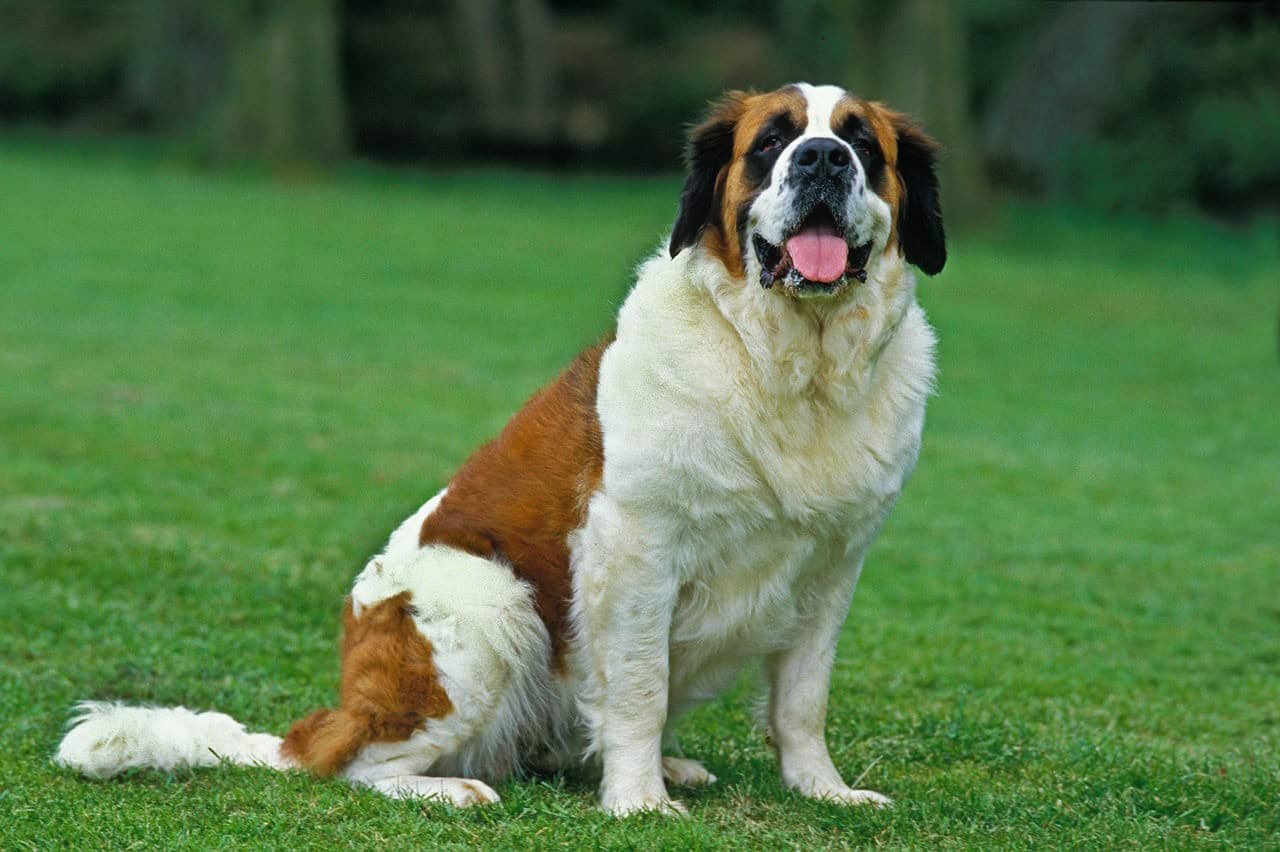
Saint Bernards come in smooth and rough coat varieties, but both have dense, weather-protective coats that shed. VCA notes that the coat can be either smooth and tough or longer and straighter to slightly wavy. PetMD says the grooming routine is basically the same for both: frequent brushing, occasional bathing, and regular nail trimming. The main difference is that rough coats are more likely to trap tangles and mats in feathered areas, while smooth coats are often easier to brush through but still shed heavily.
Smooth coat vs rough coat Saint Bernards
| Coat Type | Typical Grooming Challenge | What to Pay Closer Attention To |
|---|---|---|
| Smooth coat | Loose shedding hair and general coat maintenance | Regular brushing, seasonal deshedding, skin checks |
| Rough coat | Tangles, feathering mats, trapped debris | Behind ears, tail, legs, chest, friction points |
That distinction shows up in both breed-care guides and owner advice. Groomers and owners commonly point out that the areas behind the ears and other feathered sections are where matting tends to build fastest, especially in longer-coated Saints.
How Often Should You Brush a Saint Bernard?
A good baseline for many Saint Bernards is brushing two to three times a week, with more frequent brushing during peak shedding periods. AKC says weekly brushing helps remove dirt and loose hair, while other breed-care sources recommend multiple brushing sessions per week to keep the coat under control. The Saint Bernard Club of America says Saints typically lose much of their coats in spring and fall, which is when grooming becomes even more important.
In real life, the right answer depends on the dog’s coat type, season, and lifestyle. A Saint who hikes, drools heavily, tracks in dirt, or has a longer coat usually needs more attention than a smoother-coated dog who stays relatively clean. Owner and groomer discussions also stress that a quick surface brush is not enough if the undercoat is packed or if mats are forming underneath.
When to brush more often
Brush more often during spring and fall shedding surges, after muddy outings, when the dog is swimming more, or any time you start feeling tangles instead of a smooth, open coat. If the comb will not pass through behind the ears, under the collar area, or around feathering, the coat needs more than a casual pass with a brush.
Best Grooming Tools for a Saint Bernard
Most Saint Bernard owners do best with a small set of core tools rather than a random collection of brushes. AKC’s brush guide explains that brush choice should match breed and coat type, and Saint-specific owner advice repeatedly recommends a slicker brush and a sturdy metal comb for working through dense coat and checking problem areas. Groomer input in Saint Bernard discussions also mentions a mat breaker for problem spots and warns against waiting until mats are tight to the skin.
Useful tools for many Saint Bernards
For many Saints, the most practical kit includes a slicker brush, a metal comb, an undercoat or deshedding tool used carefully during coat blowouts, nail clippers or a grinder, ear-cleaning supplies recommended by a vet, absorbent grooming towels, and a dog-safe shampoo for occasional baths. Rough-coated dogs may also benefit from a detangling spray and careful trimming around paws or hygiene areas when needed.
Where Saint Bernards Commonly Mat
Saint Bernards are not the most mat-prone breed in the world, but rough-coated dogs especially can still develop problem areas if grooming slips. Groomers and owners often point to the fur behind the ears, around the neck, chest feathering, tail, and leg furnishings as common trouble spots. Friction from collars, harnesses, and lying in one position for long periods can also help mats form.
This matters because mats are not just cosmetic. A veterinary breed-info page notes that mats and tangles can contribute to skin infection and hot spots, particularly in warm or humid conditions. Once matting gets tight, it can pull on the skin, trap moisture, and make the dog uncomfortable long before the problem is obvious from above.
How to check for hidden mats
Use your hands first, then the comb. If you can feel clumps, thick packing, or sticky sections where the comb stops short, slow down and work the area carefully rather than ripping through it. Owner advice consistently suggests combing behind the ears and other hidden friction zones instead of assuming the topcoat tells the whole story.
Bathing a Saint Bernard
Saint Bernards do not usually need constant baths, but they do benefit from occasional full washes, especially when coat oils, drool, dirt, and undercoat buildup start making the dog feel heavy or grimy. PetMD says they need occasional bathing, and several Saint Bernard grooming sources recommend bathing roughly every 4 to 6 weeks or as needed depending on how dirty the dog gets.
The bigger issue is drying and follow-through. A giant dense-coated dog that stays damp too long can end up musty and uncomfortable, and any tangles left in before the bath can tighten. That is one reason many owners prefer to do a solid brush-out before bathing rather than after the coat is already wet and harder to manage.
Do not shave a Saint Bernard just for convenience
Saint Bernards have a double coat, and owner-groomer advice strongly warns against routine shave-downs just to reduce shedding or make summer easier. In one Saint Bernard grooming discussion, a groomer specifically says double-coated dogs use that coat for temperature regulation and recommends outline trimming and deshedding instead of shaving unless a veterinarian advises otherwise. Rover’s Saint Bernard grooming guide makes the same basic point, saying shaving is generally reserved for veterinary reasons.
Seasonal Shedding: What Owners Should Expect
Saint Bernards shed year-round, but many owners notice the biggest coat explosions in spring and fall. The Saint Bernard Club of America says they typically lose much of their coats twice a year as the seasons change. During those times, brushing may need to become a daily or near-daily task just to stay ahead of the loose undercoat.
This is one of the places where expectations matter. A Saint Bernard can look majestic in photos, but real-life ownership means tumbleweeds of hair, coat packed into corners, and brushes filling up fast in shed season. Owners who expect that usually cope better than owners who think weekly brushing will always be enough.
Ears, Nails, Paws, and Face Care
Saint Bernard grooming is not only about the coat. PetMD says regular nail trimming is part of the breed’s grooming routine, and ASPCA Pet Health Insurance notes that ear infections are among the more common issues seen in the breed. That makes routine ear checks worth building into the schedule, especially for dogs who get wet, drool heavily, or spend time outdoors.
Ears
Check ears regularly for odor, redness, excess wax, or repeated head shaking. Heavy-coated, floppy-eared dogs can trap moisture and debris more easily than owners realize.
Nails
Trim nails when you can hear them clicking on the floor or when they begin changing the dog’s stance. ASPCA Pet Health Insurance specifically uses that clicking sound as a practical sign that it is time.
Paws
Check between the pads for debris, moisture, and packed fur. Some grooming guides also recommend trimming excess foot hair to improve hygiene and reduce slipping.
Face and drool areas
Saint Bernards drool, and that drool can collect around the mouth, chest, and neck. VCA explicitly says to be prepared for drool. Wiping those areas regularly helps reduce odor, crusting, and moisture sitting against the skin.
How Grooming Supports Skin Health
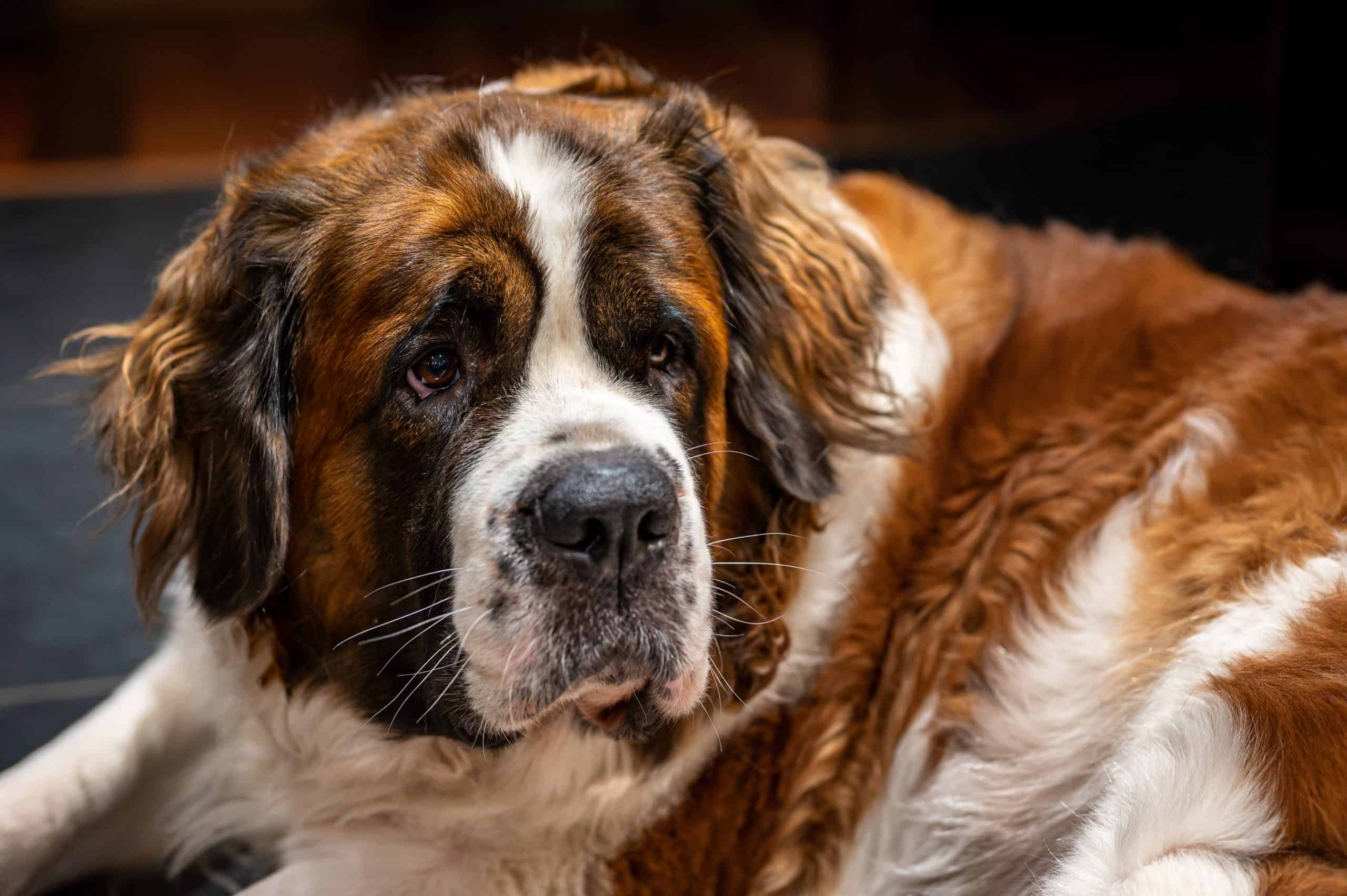
Consistent grooming helps you catch problems earlier. Matted or damp coat can hide hot spots, sores, irritated skin, parasites, and minor injuries. A Saint Bernard breed-info page notes that mats can lead to skin infection, including moist and painful hot spots, especially in hot or humid weather.
That is one reason grooming should not be treated as a cosmetic extra. When you regularly brush, comb, dry, and check the dog, you are also doing a basic health scan. For a giant breed with a dense coat, that routine can matter quite a bit.
Puppy vs Adult Saint Bernard Grooming
| Life Stage | What to Focus On | Why It Matters |
|---|---|---|
| Puppy | Gentle handling, short brushing sessions, paws, ears, bath exposure | Builds tolerance before the dog becomes enormous |
| Adolescent | Routine brushing, nail work, coat blowout management, manners on the table or floor | Coat volume and body size start making skipped grooming harder |
| Adult | Consistent brushing, seasonal deshedding, skin checks, hygiene care | Keeps the coat manageable and helps catch problems early |
Saint Bernard puppies benefit from starting early, even if they do not need full-scale grooming yet. The goal is cooperation. A giant adult who hates brushing, bathing, nails, or ear handling is much harder to manage than one who learned the routine when small. That conclusion is also supported by owner advice that stresses early tolerance and repetition.
When Home Grooming Is Enough and When a Groomer Helps
Many owners can handle routine Saint Bernard grooming at home, especially if they stay consistent. Brushing, combing, face wiping, paw checks, and basic bathing are all manageable with the right setup. But some owners prefer professional help during heavy shedding seasons, when mats start building, or when bathing and drying a giant dog becomes too much to handle alone.
A groomer can be especially helpful for blowout deshedding, coat cleanup, sanitary trimming, and dealing with matting before it turns into a bigger problem. The most useful approach is usually regular home maintenance plus occasional professional help when needed, not waiting until the coat is fully out of control.
Questions fréquemment posées
How often should you groom a Saint Bernard?
Most Saint Bernards need brushing at least weekly, and many benefit from brushing two to three times a week. During spring and fall shedding seasons, they often need more frequent brushing.
Do Saint Bernards need haircuts?
Usually not in the traditional sense. Routine shaving is generally discouraged for this double-coated breed unless a veterinarian recommends it for a medical reason. Some light trimming around paws or hygiene areas may be helpful.
Do Saint Bernards shed a lot?
Yes. Saint Bernards shed year-round and often shed heavily in spring and fall when they blow coat.
What brush is best for a Saint Bernard?
Many owners do well with a slicker brush and a sturdy metal comb. Groomer and owner advice often recommends using the comb behind the ears and in other mat-prone areas to make sure the coat is truly clear underneath.
How often should a Saint Bernard be bathed?
Many Saint Bernards do well with occasional baths, often around every 4 to 6 weeks or as needed depending on dirt, drool, and coat condition.
What grooming problems are most common in Saint Bernards?
The most common problems are heavy shedding, mats behind the ears and in feathered areas, dirty drool zones, overgrown nails, and skin trouble hidden under a dense coat.
Dernières pensées
A Saint Bernard grooming routine does not have to be fancy, but it does need to be consistent. Brushing, combing, bathing when needed, checking ears and paws, trimming nails, and staying ahead of seasonal shedding all make life easier for both the dog and the owner.
For most Saints, the difference between a manageable coat and an overwhelming one is not a miracle product. It is regular maintenance. That is what keeps the coat cleaner, the skin healthier, and the giant fluffy dog in your house looking and feeling like a Saint Bernard instead of a walking tumbleweed.