
 SV
SV  EN
EN  FR
FR  DE
DE  ES
ES  PT
PT  NL
NL  JA
JA  KO
KO Poodles are famous for their elegant coats, but that coat comes with real maintenance. Their hair grows continuously, sheds very little, and can mat quickly if grooming slips. AKC says that unless a Poodle is kept in a short trim, owners need to learn how to brush the coat properly and often enough to prevent mats. PetMD says Standard Poodles need their hair brushed every day to prevent matting and tangles, and also notes that professional grooming is usually needed every six to eight weeks.
That is the part many new owners underestimate. A Pudel coat is beautiful, but it is not low-effort. In owner discussions, people often say their brushing routine depends heavily on coat length, curl density, and clip style. Some can get by brushing a little less with a short trim, while others find that a longer teddy-bear style means brushing every day or every other day just to stay ahead of matting.
Quick Answer: How Much Grooming Does a Poodle Need?
Most Poodles need frequent brushing at home, routine ear and nail care, and professional grooming every six to eight weeks. If you keep the coat long, brushing often needs to happen daily or close to it to prevent mats. If you keep the coat short, maintenance is easier, but it is still not optional. AKC and PetMD both make the same basic point: coat length changes the workload, but regular grooming is part of owning a Poodle.
Poodle Grooming at a Glance
| Grooming Area | What Most Poodles Need | Why It Matters |
|---|---|---|
| Borstning | Frequent brushing, often daily for longer coats | Prevents mats and keeps curls open and healthy |
| Professional grooming | Usually every 6 to 8 weeks | Keeps coat length manageable and shape maintained |
| Badning | Regular baths as needed, often tied to grooming schedule | Helps keep the coat and skin clean |
| Comb-through | Important after brushing | Checks whether you reached all the way to the skin |
| Ears | Regular checks and cleaning when needed | Poodles can be prone to ear issues if maintenance slips |
| Nails | Routine trimming or grinding | Supports comfort, posture, and movement |
| Coat length choice | Shorter trims mean easier upkeep | Longer coats usually mean much more brushing |
This routine reflects AKC, PetMD, and owner experience that repeatedly points to the same truth: the amount of grooming changes with style, but no Poodle coat is truly maintenance-free.

Why Poodle Coats Need So Much Attention
Poodles are often described as low-shedding, but that should never be confused with low-maintenance. Their coat keeps growing, and loose hair often gets trapped in the surrounding curls instead of falling out cleanly. That is one reason mats can form so quickly. AKC says owners who want to keep a Poodle’s coat long need to learn proper brushing to prevent matting, and PetMD says daily brushing is needed for Standard Poodles to stay ahead of tangles.
In practice, what owners feel is not just “hair.” It is a coat that can hide small tangles until they tighten close to the skin. That is why so many Poodle owners talk about brushing routines, coat length, and grooming schedules almost as much as they talk about temperament.
How Often Should You Brush a Poodle?
The honest answer depends on coat length. A short, practical trim is easier to manage than a fluffy longer style, but even a shorter trim still needs regular coat care. AKC says it is a good idea to brush a Poodle puppy every other day or so to avoid tangles and mats, while current AKC and PetMD guidance says longer coats may need daily brushing.
Owner discussions show why this varies. Some people with shorter trims say they can brush two to three times a week and stay in good shape, while others with denser or longer coats say every day or every other day is the only way to avoid hidden mats. The most useful rule is simple: the longer the coat, the less room there is for skipping days.
What brushing schedule often works best
For many pet Poodles, brushing every other day can work if the coat is clipped shorter and the owner is thorough. For longer trims, daily brushing is often more realistic. The key is not just frequency, but quality. A quick pass over the surface is not the same as getting all the way down to the skin.
How to Brush a Poodle Properly
Technique matters as much as effort. AKC’s 2026 grooming guidance says to use a slicker brush and brush all the way down to the skin. PetMD’s matting guidance also recommends regular brushing and specifically mentions line brushing as a useful method for preventing mats.
That means brushing in sections rather than gliding over the top of the coat. If the top looks fluffy but the comb catches underneath, the coat is not actually mat-free. Many experienced owners use the slicker brush first and then a metal comb to check their work, especially in the areas most likely to mat.
Why a comb matters
A comb tells you whether the coat is truly clear. Brushes can fluff the outer layer and make the coat look tidy even when there are tangles underneath. The comb is what usually exposes mats behind the ears, under the collar, in the armpits, and around the legs. That pattern shows up again and again in owner posts about “mystery mats” that seemed to appear overnight.
Where Poodles Commonly Mat
Poodles often mat where there is friction, moisture, or dense curl. Common trouble spots include behind the ears, under the collar or harness, in the armpits, on the belly, behind the legs, and around the tail base. Reddit owners dealing with matting repeatedly mention these same areas, especially when the coat is left fluffy for longer between grooms.
PetMD’s guidance on mats explains why this matters. Mats can tighten close to the skin and become painful, and badly matted coats are often safest to remove with clippers rather than scissors because the skin can be injured easily.
What to do if you find a mat
If the mat is small and loose, careful detangling may help. If it is tight, thick, or close to the skin, it is usually safer to let a groomer or veterinarian remove it rather than trying to cut it out at home. PetMD specifically warns against using scissors on mats because skin can be cut very easily.
Short Trim vs Longer Coat: The Maintenance Trade-Off
| Coat Style | Typical Benefit | Typical Trade-Off |
|---|---|---|
| Short practical trim | Easier home maintenance, fewer mats | Still needs brushing and regular grooming appointments |
| Medium pet trim | Balanced look and manageable upkeep | Needs more frequent brushing, especially in friction areas |
| Long fluffy style | Soft, full appearance many owners love | Usually requires near-daily brushing and faster mat buildup |
This is one of the most practical grooming decisions a Poodle owner can make. AKC says a long coat requires more brushing to prevent mats, and owner experience overwhelmingly supports that. The longer the hair, the more disciplined the brushing routine needs to be.
How Often Should a Poodle Be Professionally Groomed?
For many Poodles, every six to eight weeks is the sweet spot. PetMD gives that range directly for Standard Poodles, and owner discussions often mention six- to eight-week groomer visits as the routine that keeps matting manageable. Some owners stretch a little longer with short coats, but many find that once the coat gets past that point, maintenance becomes much harder at home.
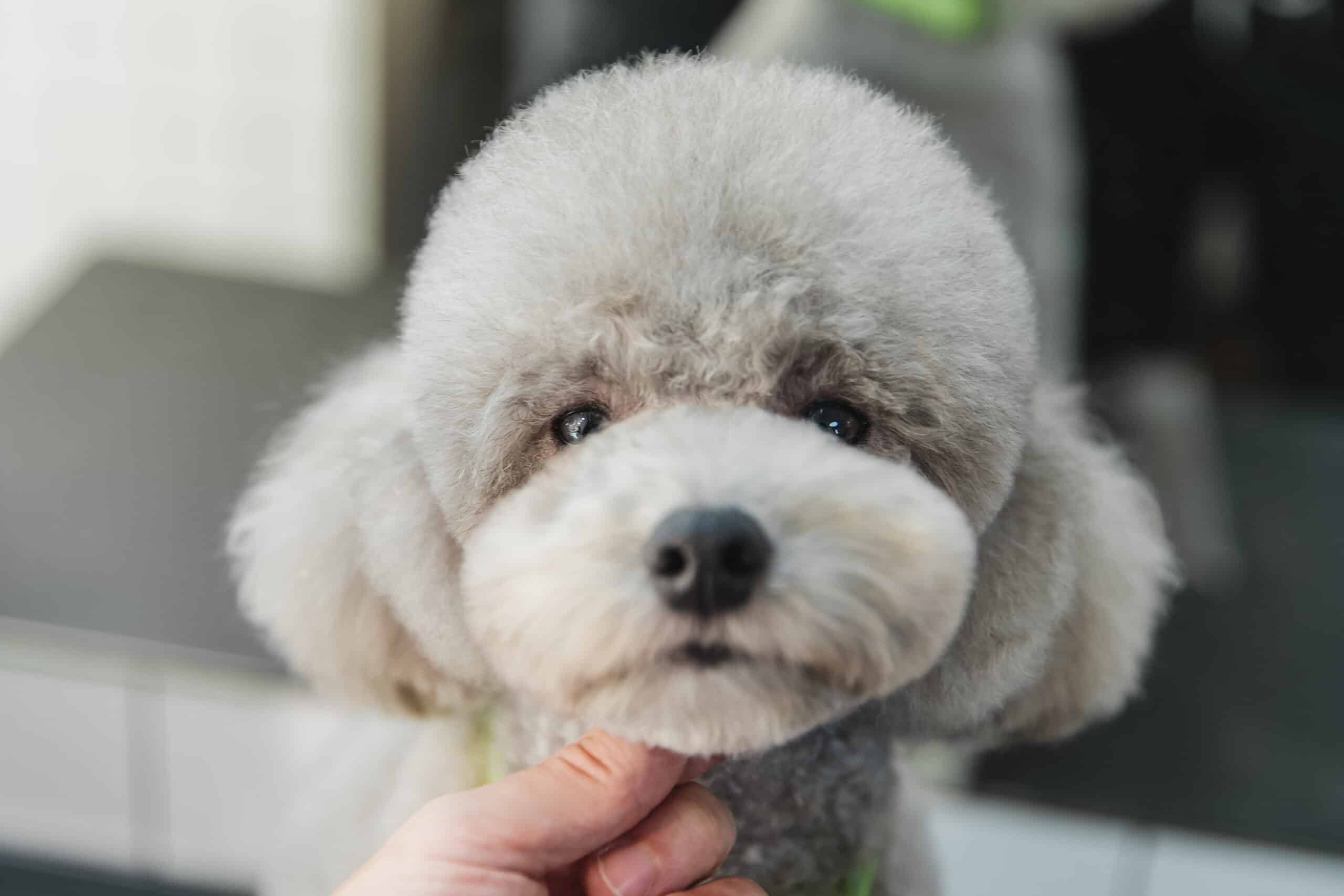
That schedule is not only about appearance. Regular appointments help keep face, feet, sanitary areas, and overall coat length easier to manage. For owners who want a fluffy pet trim, those appointments become even more important because the home workload rises between visits.
Bathing a Poodle
Poodles benefit from regular baths, but bathing works best when it is part of a grooming routine rather than a substitute for brushing. A bath can help reset the coat, but if tangles are already present, water can tighten them. That is one reason many experienced owners brush thoroughly before bathing and then dry and brush again afterward. Owner routines on Reddit often mention home baths every couple of weeks combined with brushing between professional appointments.
The main takeaway is that baths help most when the coat is already being maintained well. A dirty but mat-free coat is easier to handle than a clean coat full of hidden knots.
Ears, Nails, Teeth, and the Rest of the Routine
Poodle grooming is not only about curls. Nails still need trimming, ears need regular checks, and teeth benefit from routine care. AKC’s general grooming advice highlights nail trimmers, styptic powder, combs, brushes, shampoos, and related tools as part of a complete at-home setup. Owner routines also commonly include face cleaning, nail maintenance, and daily tooth care alongside coat work.
Ears
Poodles can be prone to ear issues, so regular checks matter. If you notice odor, redness, repeated scratching, or head shaking, that is worth attention. Ear care should be gentle and based on your veterinarian’s advice.
Nails
Trim or grind nails regularly so they do not become long enough to affect movement or comfort. This is part of routine grooming, not an optional extra.
Teeth
Many Poodle owners include daily or frequent tooth brushing as part of the normal routine, especially with Toy and Miniature Poodles where dental care becomes even more important over time. Owner schedule discussions often list dental care right alongside brushing and grooming appointments.
Puppy Grooming Habits Matter More Than People Think
One of the best things a Poodle owner can do is make grooming normal early. AKC’s Poodle club flyer suggests brushing puppies every other day or so so tangles never get out of hand. Just as important, early practice helps the puppy learn that brushing, combing, bathing, and nail work are part of life.
This matters because an adult Poodle with a dense coat who hates grooming is much harder to manage than one who grew up with calm, consistent handling. Grooming tolerance is a skill, not just a convenience.
What a Realistic Poodle Grooming Routine Often Looks Like
For many owners, a realistic routine looks something like this: brushing several times a week or daily depending on coat length, a comb-through of trouble spots, nail care as needed, ear checks, and professional grooming every six to eight weeks. Owners with shorter clips sometimes get a little more breathing room, while owners with fluffier styles usually need more discipline between appointments.
The exact schedule can vary, but the pattern is consistent. A well-kept Poodle coat usually comes from steady maintenance, not last-minute rescue sessions when the coat is already packed with knots.
Vanliga frågor
How often should a Poodle be brushed?
It depends on coat length, but many Poodles need brushing several times a week, and longer coats often need daily brushing to prevent mats. AKC and PetMD both say longer coats require frequent brushing.
How often should a Poodle be professionally groomed?
For many Poodles, every six to eight weeks works well. PetMD gives that range, and many owners say it keeps the coat much easier to manage.
Do Poodles mat easily?
Yes, especially if the coat is kept long or brushing is inconsistent. Their low-shedding curly coat can trap loose hair and form mats quickly.
What brush is best for a Poodle?
A slicker brush is commonly recommended, often followed by a metal comb to make sure the coat is clear down to the skin. AKC’s current grooming guidance specifically recommends a slicker brush.
Is a short Poodle trim easier to maintain?
Yes, usually. A shorter clip generally means less brushing and fewer mats, though regular grooming is still needed. Longer coats nearly always increase the home workload.
Can I cut mats out with scissors at home?
That is risky. PetMD warns that scissors can easily cut the skin because mats sit so close to it. Tight mats are often safest handled with clippers by a professional.
Slutgiltiga tankar
A Poodle coat can be beautiful, soft, and surprisingly versatile, but it stays that way through regular care. Brushing, combing, bathing, nail care, ear checks, and routine grooming appointments all work together. The biggest decision is often not whether to groom, but how much maintenance you want your chosen coat style to require.
For many owners, the best grooming routine is the one they can keep up with consistently. A shorter trim with faithful maintenance is usually kinder to the dog than a longer style that turns into hidden mats and stressful rescue brushing sessions.