
 EN
EN  FR
FR  DE
DE  ES
ES  PT
PT  NL
NL  SV
SV  JA
JA  KO
KO Irish Wolfhounds are famous for their gentle nature and enormous size, but that giant frame comes with some serious health realities. The Irish Wolfhound Club of America says the breed has particular tendencies toward bloat, heart disease, bone cancer, lymphoma, and pneumonia. PetMD likewise says Irish Wolfhounds have several serious health conditions owners need to stay vigilant for, and notes the breed’s average lifespan is around 6 to 8 years.
That does not mean every Wolfhound will face all of these issues. It does mean that owners are usually better off learning the warning signs early, choosing breeders carefully, and taking breed-specific screening seriously instead of relying on general “large dog” advice. The Irish Wolfhound Foundation says the major causes of death in the breed are cancer, especially bone cancer, heart disease, bloat or torsion, pneumonia, and rear-end weakness in older dogs.
Quick Answer: What Health Problems Are Irish Wolfhounds Most Prone To?
Irish Wolfhounds are most often associated with bloat or GDV, heart disease such as atrial fibrillation and dilated cardiomyopathy, osteosarcoma, pneumonia, and liver shunt in puppies. Other issues owners may hear about include joint problems, eye disease, hypothyroidism, megaesophagus, and rear-end weakness in older dogs. The Irish Wolfhound Club of America and Irish Wolfhound Foundation both place heart disease, bloat, cancer, pneumonia, and liver shunt among the breed’s most important concerns.
Irish Wolfhound Health at a Glance
| Health Area | Why It Matters in Irish Wolfhounds | What Owners Should Watch For |
|---|---|---|
| GDV and bloat | Deep-chested giant breeds are at increased risk | Retching, swollen abdomen, drooling, collapse, distress |
| Heart disease | Atrial fibrillation and dilated cardiomyopathy are major breed concerns | Weakness, exercise intolerance, fainting, irregular heartbeat, laboured breathing |
| Bone cancer | Osteosarcoma is one of the breed’s biggest long-term threats | Limping, lameness, swelling, persistent limb pain |
| Pneumonia | Breed clubs specifically flag it as a serious emergency | Coughing, fever, laboured breathing, lethargy, unusual exhaustion |
| Liver shunt | Puppies should be screened before going home | Poor growth, digestive problems, urinary issues, odd neurologic signs |
| Joint and rear-end issues | Giant-breed growth and aging place extra strain on the body | Stiffness, weakness, trouble rising, reluctance to move |
This summary reflects breed-club material, PetMD, and the Irish Wolfhound Foundation, which consistently emphasize that the breed’s biggest risks are not random minor issues but a fairly specific set of high-stakes conditions.
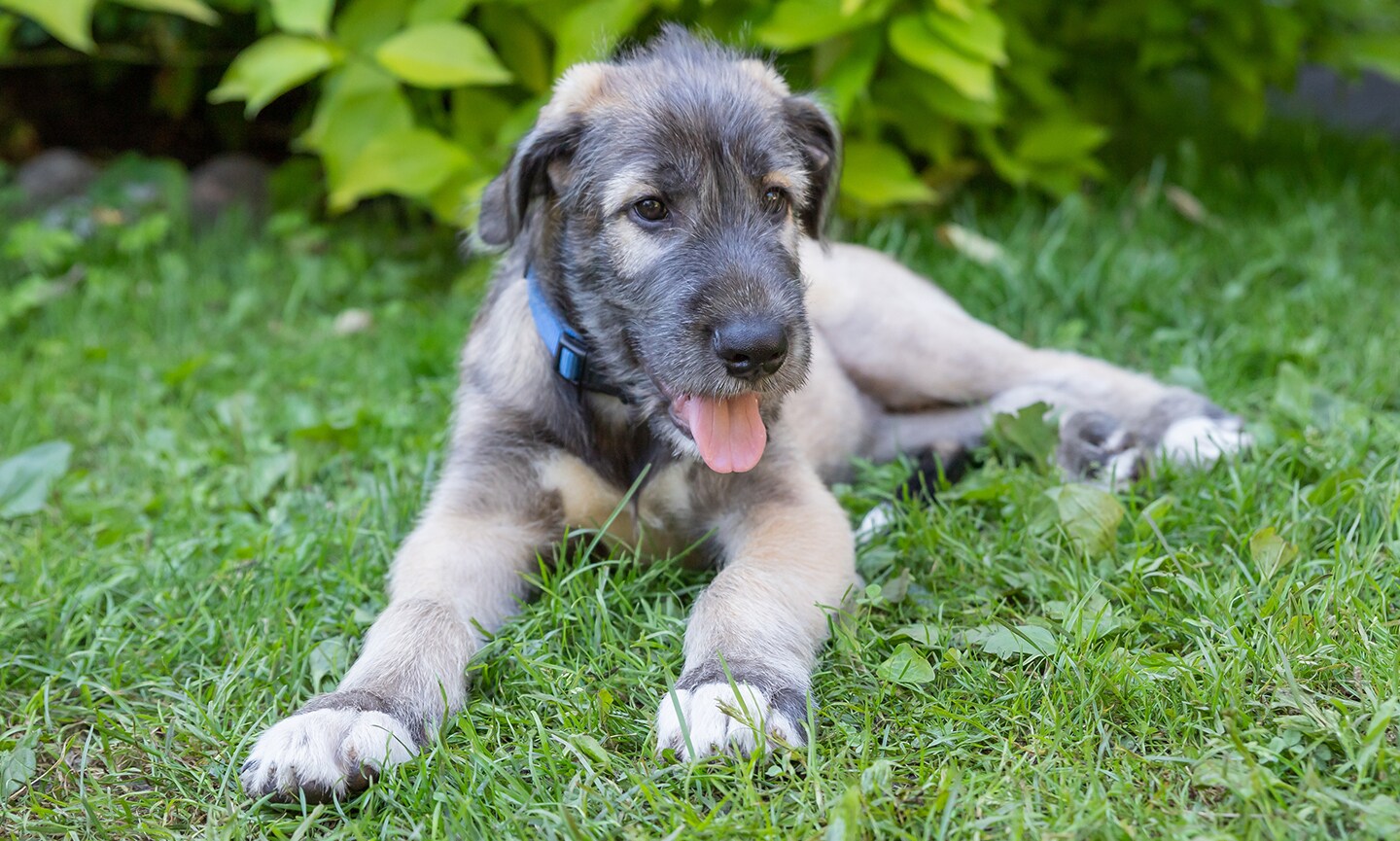
GDV and Bloat
Bloat is one of the most urgent emergencies Irish Wolfhound owners need to know. The Irish Wolfhound Club of America explains that bloat, correctly called gastric dilatation, is often accompanied by twisting of the stomach, known as volvulus, and that together they form GDV. PetMD says GDV happens when the stomach fills with food or gas, expands, and may then rotate, leading to shock, tissue damage, and death if it is not treated quickly.
Signs that need immediate emergency care
The IWCA describes the classic sound of unsuccessful retching as something owners rarely forget once they have heard it. PetMD adds that symptoms include retching without producing vomit, a swollen abdomen, drooling, and collapse. This is not a wait-and-see problem. If those signs appear, emergency care is needed right away.
Why Wolfhounds are at risk
PetMD notes that older deep-chested dogs, dogs fed from elevated bowls, and dogs fed only once per day have increased GDV risk. The breed club’s health and longevity page also lists bloat and torsion as one of the breed’s major serious conditions.
Heart Disease: Atrial Fibrillation and Dilated Cardiomyopathy
Heart disease is one of the defining health concerns in Irish Wolfhounds. The Irish Wolfhound Health Group says the breed has a high prevalence of cardiac dysfunction, some of it inherited, and identifies atrial fibrillation as the most common abnormality. It also notes that many cases of atrial fibrillation progress to dilated cardiomyopathy, and that most Wolfhounds with DCM eventually progress to congestive heart failure.
Peer-reviewed research supports how important this is in the breed. A 2019 study of 151 Irish Wolfhounds with DCM described it as an important cause of morbidity in the breed. An earlier review likewise reported dilated cardiomyopathy among the diseases most frequently seen in Irish Wolfhounds.
Warning signs owners may notice
Breed-info veterinary resources describe heart disease signs such as weakness, tiring easily, fainting or collapsing, laboured breathing, or coughing. The Irish Wolfhound Foundation adds that early detection matters because heart disease is increasingly treatable when found before it becomes advanced.
Screening matters in this breed
The Irish Wolfhound Health Group recommends regular heart testing from age two, or earlier for breeding dogs, and explains that auscultation, ECG, and other cardiology tools are used to detect rhythm and heart-muscle problems. For owners looking at breeders, the Irish Wolfhound Foundation says hereditary issues that should be tested in breeding dogs include heart problems, hip dysplasia, elbow dysplasia, and inherited eye problems.
Osteosarcoma and Other Cancer Risks
Cancer is one of the hardest parts of Irish Wolfhound ownership, and osteosarcoma is the cancer owners hear about most often. The Irish Wolfhound Club of America’s health and longevity page lists cancer, particularly osteosarcoma, among the breed’s serious health issues. PetMD says osteosarcoma is an aggressive bone cancer that Irish Wolfhounds are predisposed to.
What it can look like at home
PetMD says the first sign is often lameness or limping. Owner discussions reflect the same fear in more personal terms, with owners describing new front-leg limping, exhaustion, and concern about osteosarcoma in middle-aged or older Wolfhounds.
Why unexplained lameness matters more in a giant breed
A limp in any dog deserves attention, but in a giant breed with known osteosarcoma risk, a persistent limp or limb swelling deserves especially prompt follow-up. The Irish Wolfhound Foundation also places cancer, especially bone cancer, among the breed’s leading causes of death.
Pneumonia: A Breed-Specific Emergency Owners Often Mention
Pneumonia comes up in Irish Wolfhound health discussions more often than many prospective owners expect. The Irish Wolfhound Club of America includes pneumonia among the breed’s significant adult health issues, and its health and longevity page calls it another serious emergency. The Irish Wolfhound Foundation also lists pneumonia among the major causes of death in the breed.
Why owners talk about this so much
Owner communities repeatedly mention learning the signs of pneumonia as one of the practical realities of owning the breed. In one Reddit discussion, an owner specifically listed “learning the unique signs of pneumonia” among the things they wish they had known earlier. Another described a dog with life-threatening pneumonia that later developed a heart condition.
What to watch for
Breed sources consistently frame pneumonia as something to take seriously if a Wolfhound develops coughing, fever, unusual lethargy, breathing trouble, or a level of exhaustion that feels out of character. Because Wolfhounds can already be calm dogs, it is easy to underestimate how sick they are if you only judge by “quietness.”
Liver Shunt in Puppies
Liver shunt, also called portosystemic shunt or PSS, is one of the most important conditions for puppy buyers to know. The Irish Wolfhound Club of America says puppies should be screened at 8 to 10 weeks before going to new homes, while the Irish Wolfhound Foundation says puppies should be screened at 10 to 12 weeks. Either way, the point is the same: this is not a condition responsible breeders should ignore.
Signs owners might see
The IWCA liver shunt page says affected puppies may show vomiting, odd-coloured stool, diarrhea or constipation, lack of appetite or a voracious appetite, and pica. It also notes urinary signs such as increased thirst, urinary crystals or stones, urinary tract infections, and difficulty urinating. Puppies may be smaller, thinner, and have poor coat quality or itchy skin.
Why screening before placement matters
The liver shunt page stresses that even apparently healthy puppies can potentially have a shunt, which is why all puppies should be tested as late as possible before going to new homes. That is one of the clearest health-screening questions a buyer can ask an Irish Wolfhound breeder.
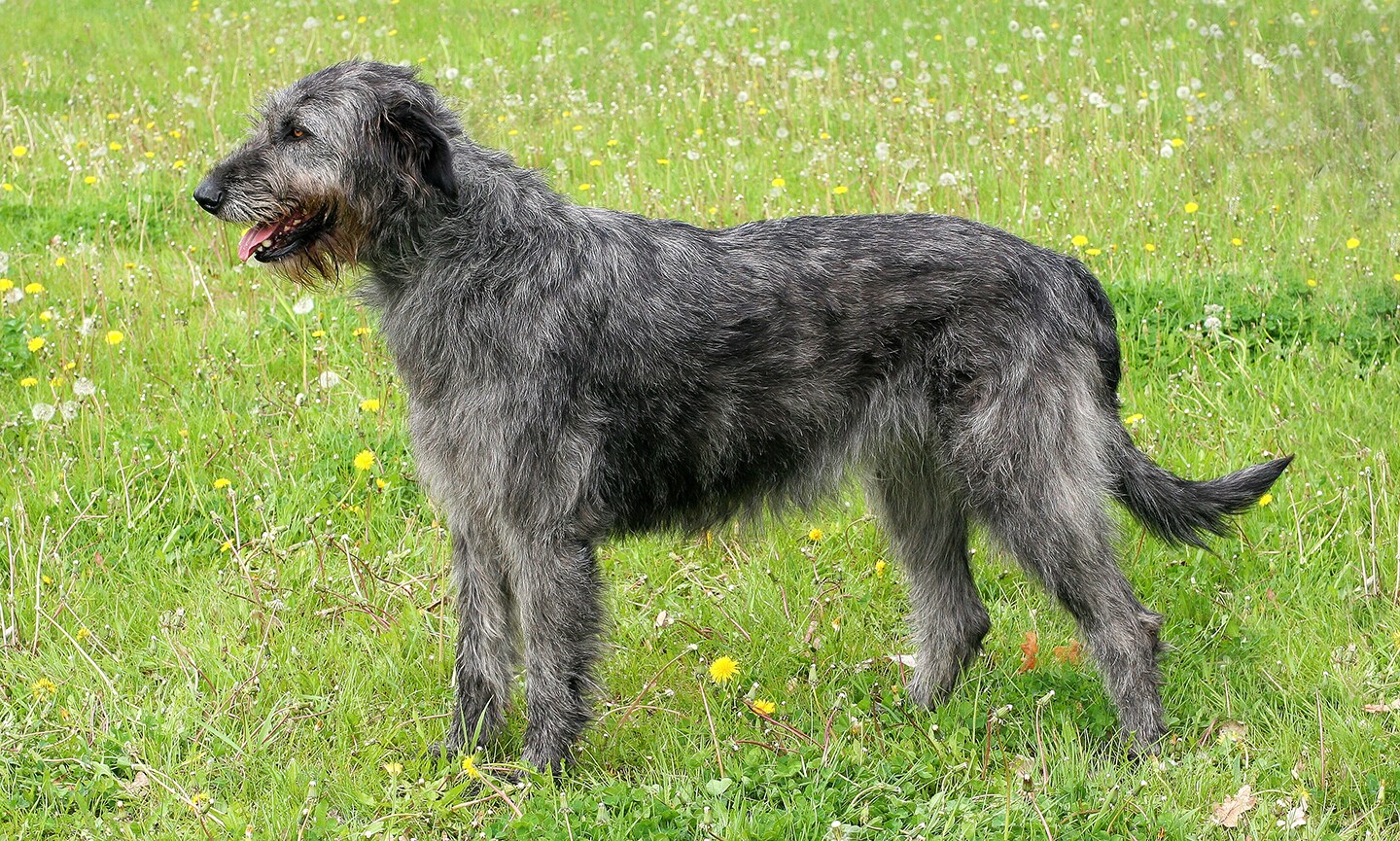
Joint Problems, Rear-End Weakness, and Giant-Breed Wear
Not every important Wolfhound health issue is a dramatic emergency. The breed’s size alone creates long-term structural stress. The IWCA health and longevity page lists joint issues, especially in rapidly growing puppies, and rear-end weakness in older dogs among the breed’s known concerns. The Irish Wolfhound Foundation also identifies rear-end weakness in older dogs as one of the major causes of decline.
Owner reports often describe a similar pattern in aging dogs: more exhaustion after activity, more recovery time, stiffness, and less resilience than when the dog was younger. In one discussion about aging Wolfhounds, an owner described dramatic slowdown, increased need for recovery, and concern about distinguishing normal aging from more serious disease.
Other Health Issues Owners May Hear About
Beyond the headline concerns, Irish Wolfhound breed sources also mention megaesophagus, progressive retinal atrophy, seizures and other neurologic issues, hypothyroidism, von Willebrand’s disease, and hygromas. The 2007 review of breed predispositions also reported diseases of the osteochondrosis spectrum, epilepsy, PRA, von Willebrand’s disease, and juvenile fibrocartilaginous embolism among the issues described in the breed literature.
These are not always the first problems owners think about, but they belong in a serious breed-health overview because they affect breeder screening, long-term care planning, and what symptoms should not be brushed off.
Health Screening Questions Puppy Buyers Should Ask
| Screening or Question | Why It Matters | Source |
|---|---|---|
| Heart screening | Heart disease and rhythm problems are major breed concerns | Irish Wolfhound Health Group / Foundation |
| Liver shunt screening in puppies | Puppies should be screened before going home | IWCA / Foundation |
| Hip and elbow screening | Recommended hereditary screening in breeding dogs | Irish Wolfhound Foundation |
| Inherited eye screening | Breed foundation recommends testing in breeding dogs | Irish Wolfhound Foundation |
| Family history of osteosarcoma and longevity | Cancer and lifespan remain major breed realities | Breed clubs / owner emphasis |
This kind of screening conversation is important because Irish Wolfhound health is not just about reacting to emergencies. It also depends on whether the dog came from lines where the breeder took known risks seriously. In current owner discussions, health testing and liver shunt screening come up repeatedly when people talk about finding responsible breeders.
When an Irish Wolfhound Needs Immediate Veterinary Attention
Some signs should be treated as urgent in this breed. Unsuccessful retching, a tight or swollen abdomen, sudden collapse, severe weakness, laboured breathing, or a rapid unexplained decline all deserve immediate care. Those signs are especially important because they overlap with GDV, serious heart disease, and pneumonia, which are among the breed’s most dangerous problems.
Other signs may not be midnight emergencies but still should not be put off: a persistent limp, ongoing exercise intolerance, fainting, chronic cough, repeated digestive trouble, unexplained urinary issues, or a puppy who seems unusually small and unthrifty. In Irish Wolfhounds, these can point toward breed-relevant problems rather than vague “big dog” wear and tear.
Frequently Asked Questions
What is the biggest health risk in Irish Wolfhounds?
There is not just one. The biggest recurring concerns are GDV, heart disease, osteosarcoma, pneumonia, and liver shunt in puppies. Breed-club and foundation sources consistently put those near the top of the list.
Are Irish Wolfhounds prone to heart disease?
Yes. Irish Wolfhounds have a high prevalence of cardiac dysfunction, and atrial fibrillation plus dilated cardiomyopathy are major breed concerns. Regular heart screening is strongly emphasized by breed-health groups.
What are the warning signs of bloat in an Irish Wolfhound?
Classic warning signs include unsuccessful retching, a swollen abdomen, drooling, distress, and collapse. These signs require emergency veterinary care right away.
Do Irish Wolfhounds get bone cancer often?
Osteosarcoma is one of the breed’s best-known cancer risks. Persistent limping, limb pain, or swelling should be checked promptly.
Why do breeders screen Irish Wolfhound puppies for liver shunt?
Because liver shunt is a recognized developmental disorder in the breed, and puppies should be screened before going to new homes. Some affected puppies may look only mildly off, while others show digestive, urinary, growth, or neurologic signs.
Is pneumonia really a major issue in Irish Wolfhounds?
Yes. Breed clubs and the Irish Wolfhound Foundation specifically name pneumonia as one of the breed’s serious health concerns, and owner communities mention it often enough that many experienced owners urge newcomers to learn its warning signs.
Final Thoughts
Irish Wolfhound health is not defined by one single problem. It is shaped by a cluster of giant-breed and breed-specific risks that owners really do need to understand: GDV, heart disease, osteosarcoma, pneumonia, liver shunt, and the long-term strain of living in such a large body. The good news is that several of these problems are better managed when they are recognized early, and breed clubs strongly emphasize screening and vigilance for exactly that reason.
The most helpful mindset is not panic. It is preparedness. A Wolfhound owner who knows what symptoms matter, asks the right breeder questions, and takes new changes seriously is usually in a much better position than one who assumes every big slow dog problem is just “normal giant breed stuff.”